
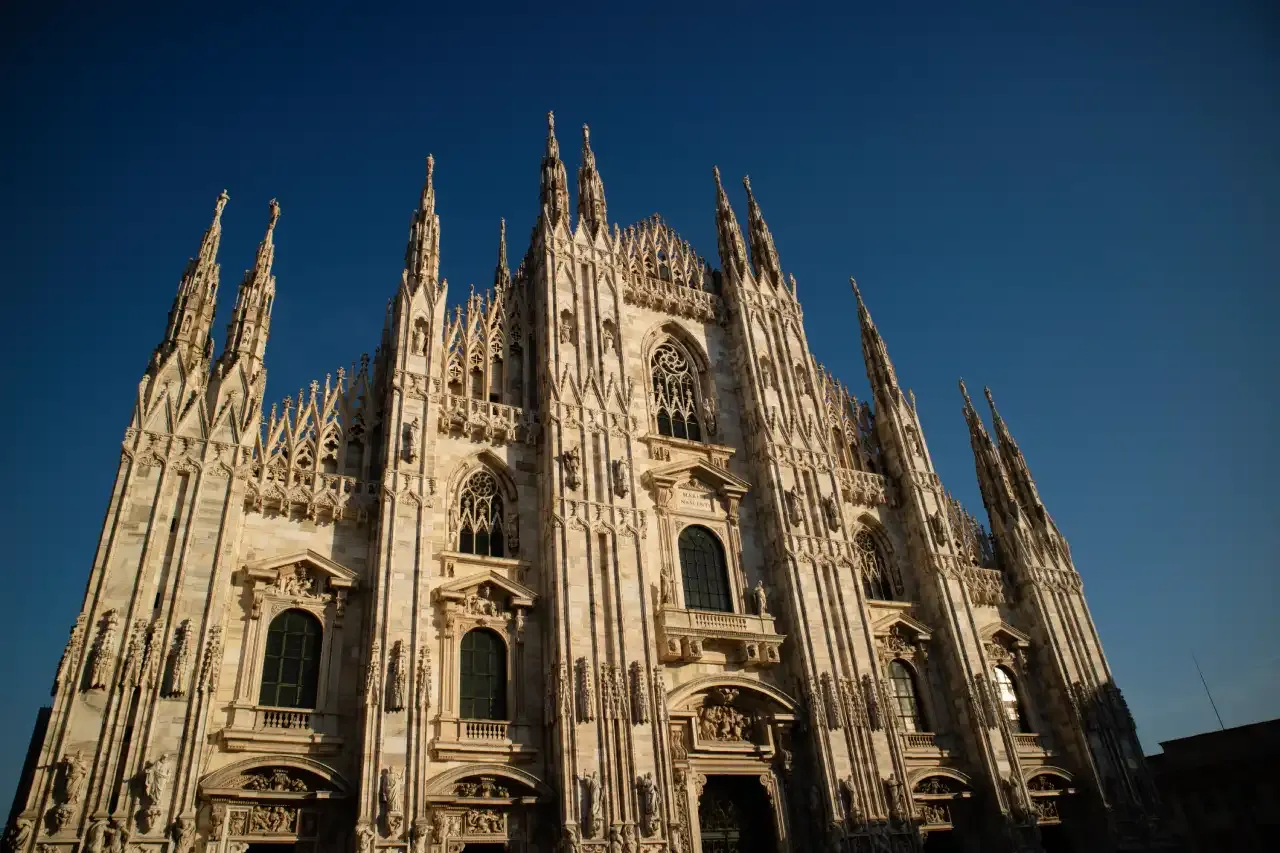
History of Duomo Milan
The history of Duomo Milan is a six-century architectural timeline that began in 1386 under the patronage of Duke Gian Galeazzo Visconti and Archbishop Antonio da Saluzzo.
Opening hours
The cathedral open daily from 9:00 AM to 7:00 PM, while the rooftops and museum follow specific schedules.
Location
The cathedral is situated in Piazza del Duomo at the city's geographic center.
Estimated visit time
A tour of the cathedral, archaeological area, and rooftops takes 1.5 to 4 hours, or up to 4 hours if including the museum.
Timeline of the Duomo Milan
The Duomo Milan has a long history that stretches across many centuries. His timelines is:
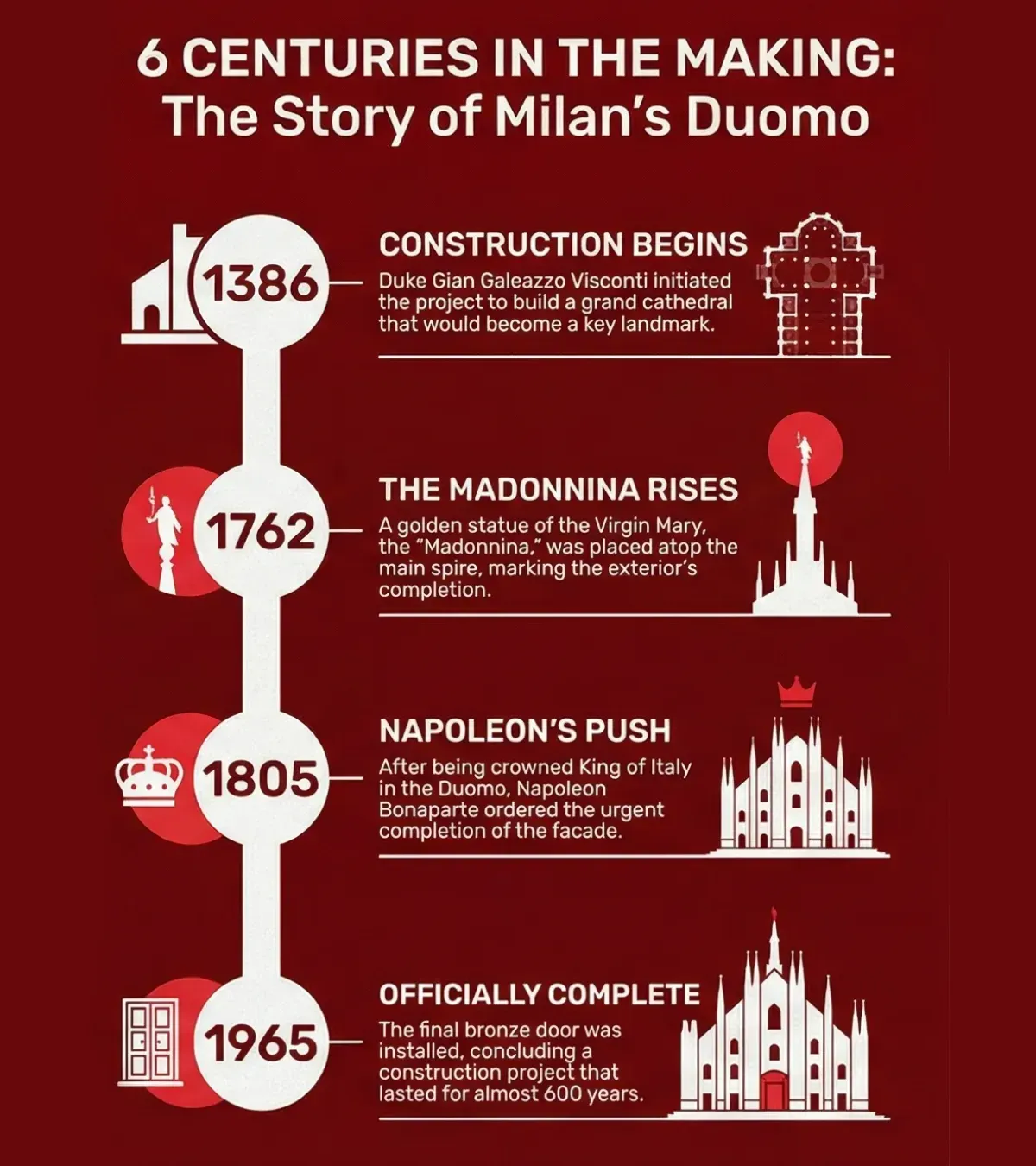
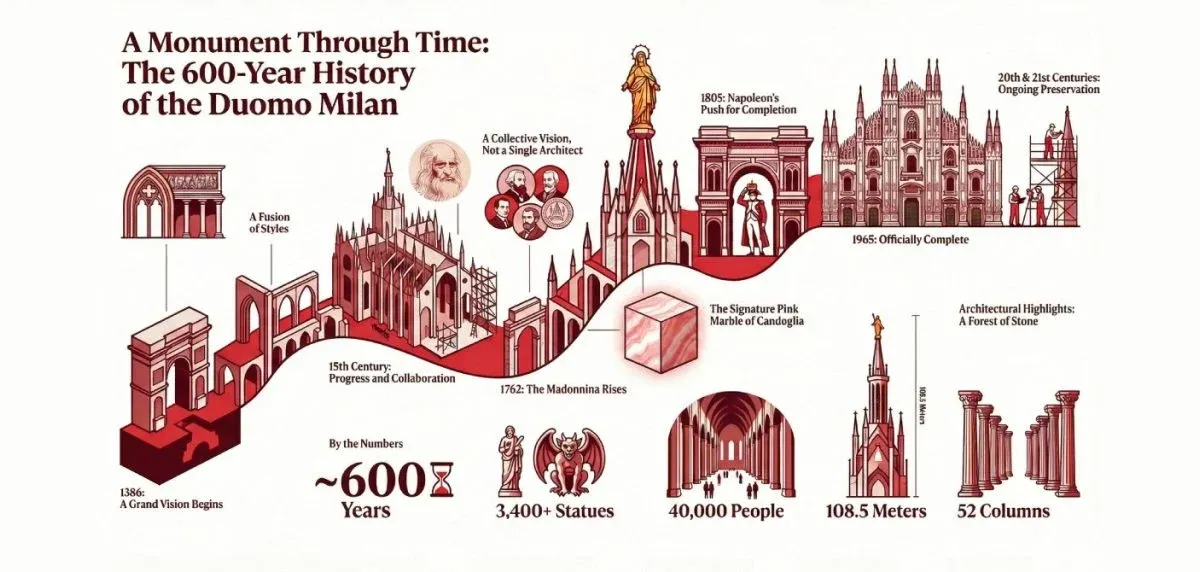
- 1386: Construction of the Duomo Milan starts which was led by Gian Galeazzo Visconti the Duke of Milan. The goal was to build a grand cathedral that would be a key religious landmark in the city.
- 1762: A golden statue of the Virgin Mary called the Madonnina is placed at the top of the main spire. This symbolises the completion of the cathedral’s exterior.
- 1805: Napoleon Bonaparte is crowned King of Italy in the Duomo Milan. This event brings a new push to finish the cathedral with Napoleon’s influence helping to complete the facade.
- 1965: The Duomo Milan is officially completed marking a significant milestone in its long history.
- 20th Century: The Duomo goes through many restoration projects to fix damage caused by weather and pollution. These efforts aim to keep the cathedral’s detailed architecture in good shape.
- 21st Century: Restoration and maintenance continue to ensure the Duomo Milan stays in excellent condition. This ongoing work helps preserve the cathedral’s beauty for future generations to enjoy.
During the 15th century, the construction of the Duomo Milan made significant progress. The cathedral’s structure grew and the detailed facade with its spires and statues started to form. Famous artists and architects like Leonardo da Vinci, Andrea Pisano, Arnolfo di Cambio, Filippo Brunelleschi, and Giotto contributed ideas to the design making the Duomo even more artistically rich. By 1762, the golden statue of the Virgin Mary known as the Madonnina was placed on top of the main spire. This marked the completion of the cathedral’s exterior.
When was Duomo Milan built?
When was Duomo Milan built?
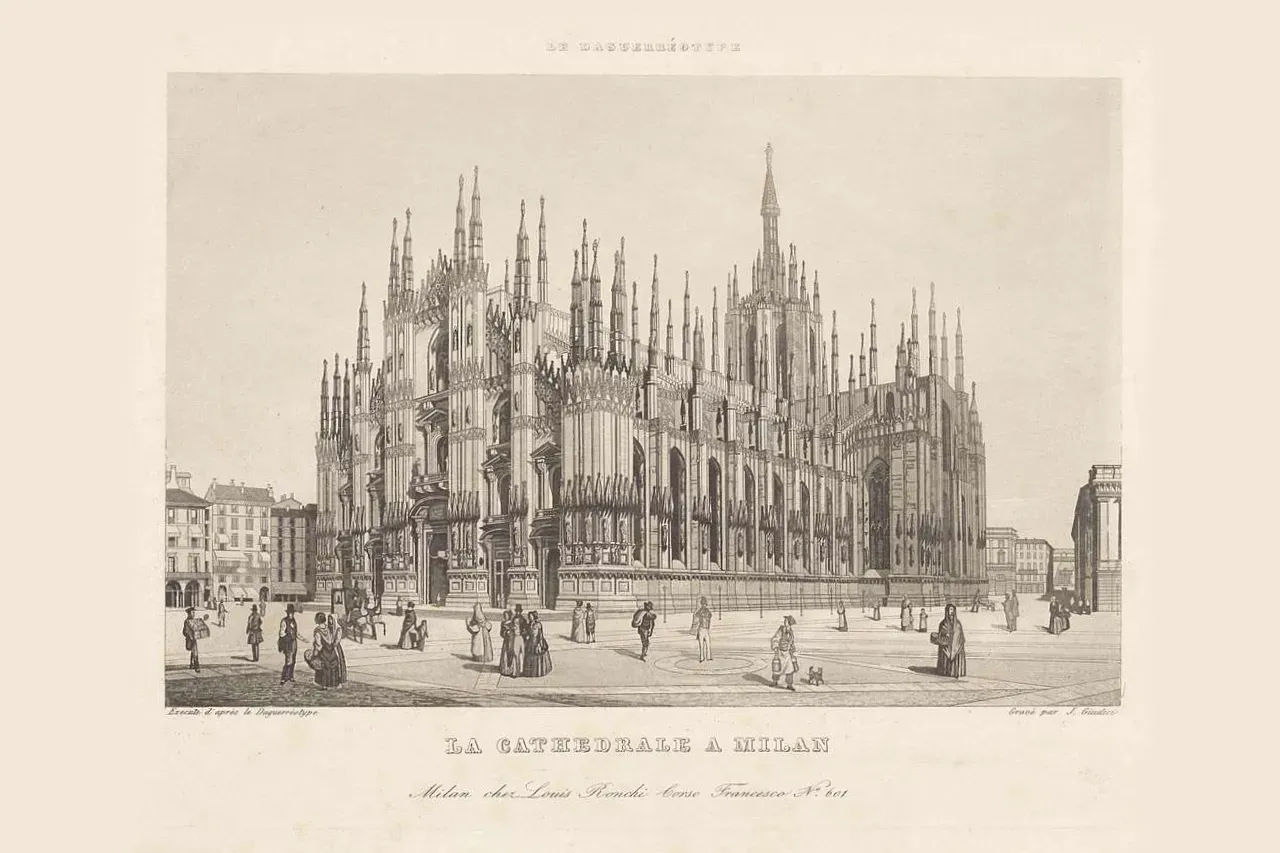
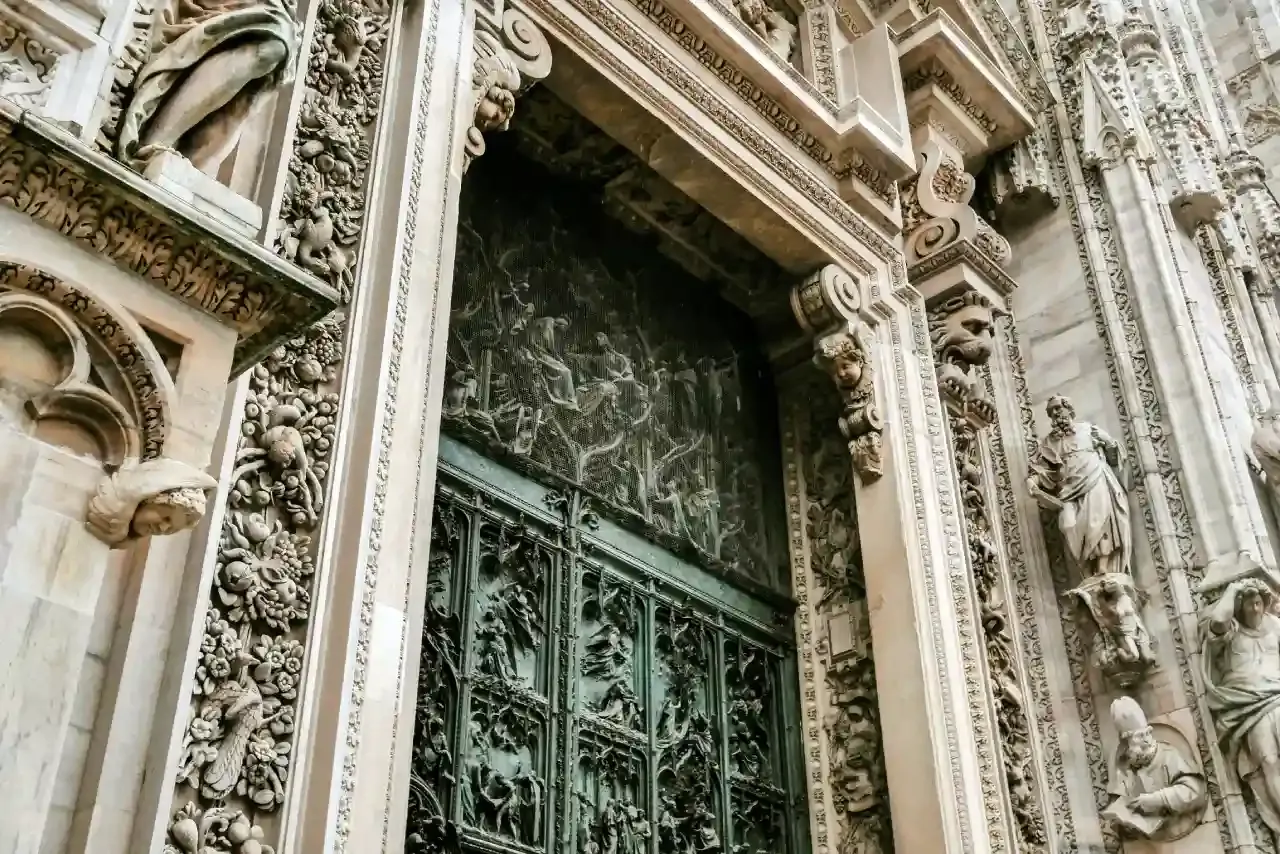
The Duomo di Milano was built over a span of nearly six centuries, with construction officially beginning in 1386 under Archbishop Antonio da Saluzzo. While the cathedral’s main façade was finished in 1813 by order of Napoleon Bonaparte, the structure was not considered fully complete until the final bronze door was installed in 1965.
The construction of the Milan Duomo began when Archbishop Antonio da Saluzzo and the Lord of Milan, Gian Galeazzo Visconti, decided to build a cathedral that would surpass any other of the era in grandeur.
However, the main façade wasn’t completed until 1813, under orders from Napoleon Bonaparte, who wanted to be crowned King of Italy in a finished cathedral that would symbolize his power. But even after this, work continued: the last bronze door was installed in 1965.
So, if you’re wondering how old the Duomo in Milan is, the answer depends on which part you’re looking at: the building has more than 635 years of history since its first foundations, though technically it wasn’t considered completely finished until the mid-20th century.
What can you explore?
The interior of the Duomo is characterized by 52 monumental columns supporting the vaults and illuminated by historic stained glass windows. Key features include the Crypt of San Carlo Borromeo located beneath the main altar and the Duomo Treasury, which houses a collection of medieval reliquaries and sacred liturgical ornaments.
On the other hand, the Duomo Terraces are a rooftop observation area providing 360° panoramic views over Milan and the Alpine arch. Accessible via elevator or a 250-step staircase, the roof allows for close inspection of the cathedral’s Gothic architecture, which includes over 3,400 marble statues and spires.
As for the Duomo Museum, located in the Palazzo Reale facing the cathedral, it houses an impressive collection of original sculptures, tapestries, stained glass, and models documenting the temple’s construction. It’s an essential stop if you want to understand the artistic details and techniques used throughout the centuries.
For lovers of ancient history, the archaeological area helps you understand Milan’s Christian origins. Beneath the current cathedral lie the remains of the Baptistery of San Giovanni (4th century) and the ancient basilica of Santa Tecla, where Saint Ambrose baptized Saint Augustine in the year 387.
Finally, many tourists overlook the Church of San Gottardo in Corte, connected to the Duomo complex. This small 14th-century temple, with its elegant octagonal bell tower, was the private chapel of the Lords of Milan and preserves frescoes of great historical value.
Our recommendation for an optimal visit: start with the interior and crypt to understand the spiritual dimension of the place, continue with the terraces to enjoy the views (preferably at sunset), and finish at the museum to delve deeper into the details you’ve just seen. Set aside at least 3-4 hours if you want to experience it calmly and without rushing.
Architect responsible for Milan Cathedral
The Duomo’s construction was a collective project that involved dozens of architects, engineers, and master builders over nearly six centuries.
The initial project in 1386 was under the direction of Simone da Orsenigo, the first chief engineer, who established the foundations of the Lombard Gothic design. However, debates soon arose about how the work should continue, leading to the hiring of French and German architects specialized in international Gothic, such as Nicolas de Bonaventure and Jean Mignot.
The latter, who arrived from Paris in 1399, led intense technical discussions with the Lombard masters about the building’s structural stability. In fact, the foreign architects questioned whether the cathedral could support its own weight, generating one of the first documented architectural debates in history.
Looking at the history with perspective, we see that figures like Filippino degli Organi, Giovanni Antonio Amadeo (who worked on the tiburio), Pellegrino Tibaldi in the 16th century, and later Carlo Buzzi and Francesco Maria Richini in the 17th participated in the construction. The neoclassical façade was finally completed by Giuseppe Zanoja and Carlo Amati under Napoleonic supervision in the early 19th century.
So when someone asks you who built the Duomo di Milano, the correct answer would be: entire generations of architects, sculptors, and artisans who turned this cathedral into an authentic multigenerational project where each era left its mark.
What is the architectural style of the Duomo?
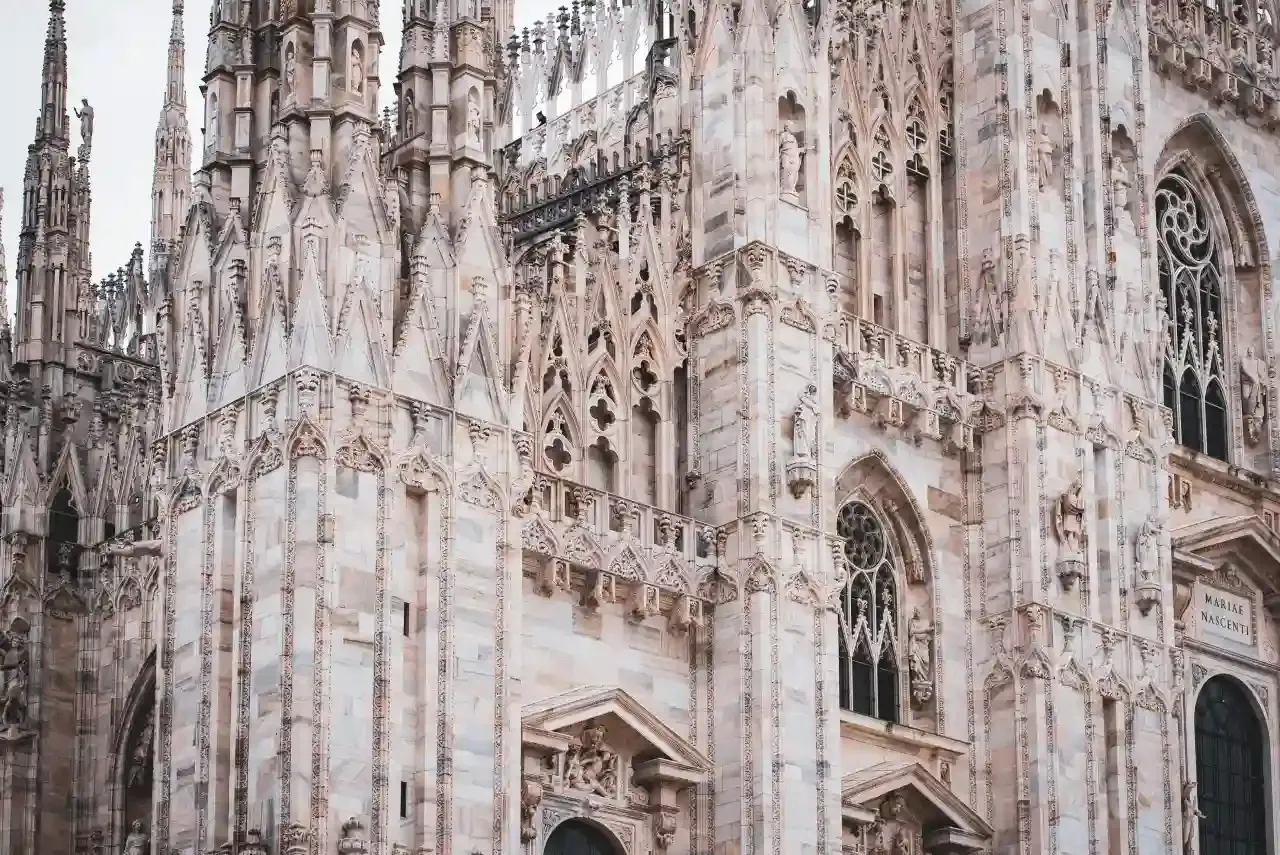
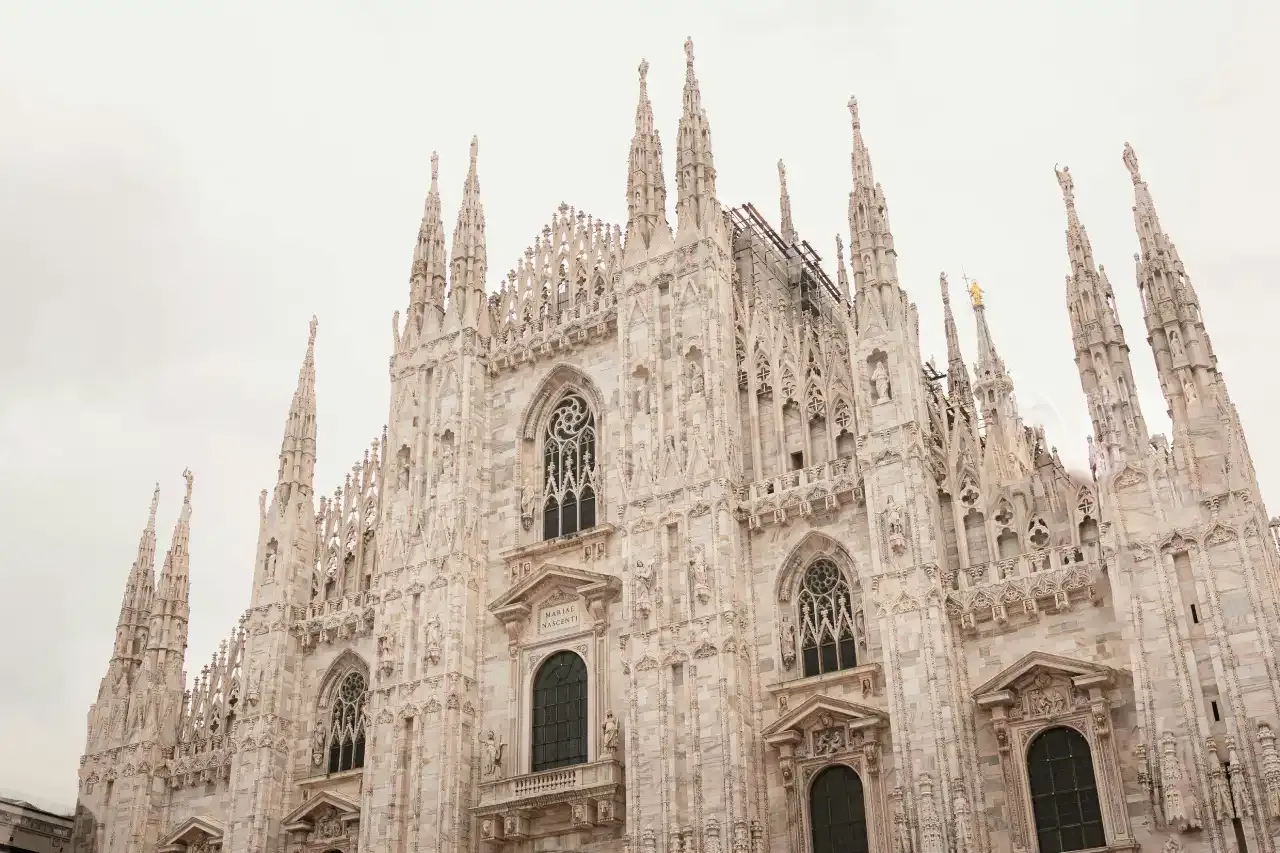
The Milan Duomo is a unique masterpiece of Lombard Gothic, blending international Gothic verticality with Renaissance and Neoclassical influences. This stylistic evolution reflects its centuries-long construction, from 14th-century ribbed vaults to the 19th-century Napoleonic façade. While it features classic flying buttresses and gravity-defying spires, the consistent use of pink-white Candoglia marble provides a surprising visual coherence, unifying diverse artistic eras into one iconic, monumental vision.
The pink marble from Candoglia
The Duomo’s appearance is defined by its unique pink and white Candoglia marble, sourced from quarries near Lake Maggiore. Since 1387, these quarries have been exclusively reserved for the cathedral’s construction and ongoing restoration. Historically, the stone reached Milan via the Naviglio Grande on tax-exempt barges marked "AUF," a practice that birthed the local expression “a ufo” (for free).
Aesthetically, this marble distinguishes the Duomo from the dull gray stone of typical European Gothic cathedrals. Its warmth is transformative; the facade shifts hues with the daylight, glowing with golden and reddish tones at dawn and dusk. This centuries-old commitment to the same material ensures the monument's timeless beauty and architectural continuity for future generations.
What is the interior of the Duomo like?
When you enter inside the Duomo, the first thing you’ll feel is the immense vastness of the space. The cathedral has a Latin cross floor plan with five naves: a central nave flanked by two side naves on each side. This structure is unusual, as most Gothic cathedrals have three naves; the Duomo chose five to expand the temple’s capacity, which can hold up to 40,000 people:
- The central nave measures 148 meters long and reaches a height of 45 meters at its highest point, creating that characteristic Gothic sense of verticality. The space is supported by 52 monumental columns, each 24 meters high, representing the 52 weeks of the year according to medieval symbolism.
- The transept (the transversal nave that forms the arms of the cross) is equally impressive, measuring 92 meters wide. At the crossing between the central nave and the transept rises the octagonal tiburio, a 65-meter structure that allows zenithal light to enter and was one of the cathedral’s greatest construction challenges.
- The ribbed vaults covering the naves efficiently distribute weight toward the columns, allowing the side walls to be less massive and accommodate the 55 monumental stained glass windows, some of which date from the 15th century. The light penetrating through these windows creates a mystical atmosphere, with tones that change depending on the time of day.
- The floor is covered with marble slabs arranged in geometric patterns, and in the central nave you’ll find a bronze meridian line that marks solar noon, installed in 1786 by Milanese astronomers to adjust the city’s clocks.
- The main altar, beneath the tiburio, is surrounded by an elevated presbytery accessed via staircases. Behind it lies the choir, with seats carved in 16th-century walnut wood. Don’t miss the monumental organ, with more than 15,000 pipes, considered one of the largest in Italy.
Walking through the Duomo’s interior is like traversing a treatise on sacred geometry made stone: each proportion, each architectural element has a symbolic meaning that medieval builders meticulously designed to elevate the human spirit toward the divine.
Who is buried in Duomo Milan?
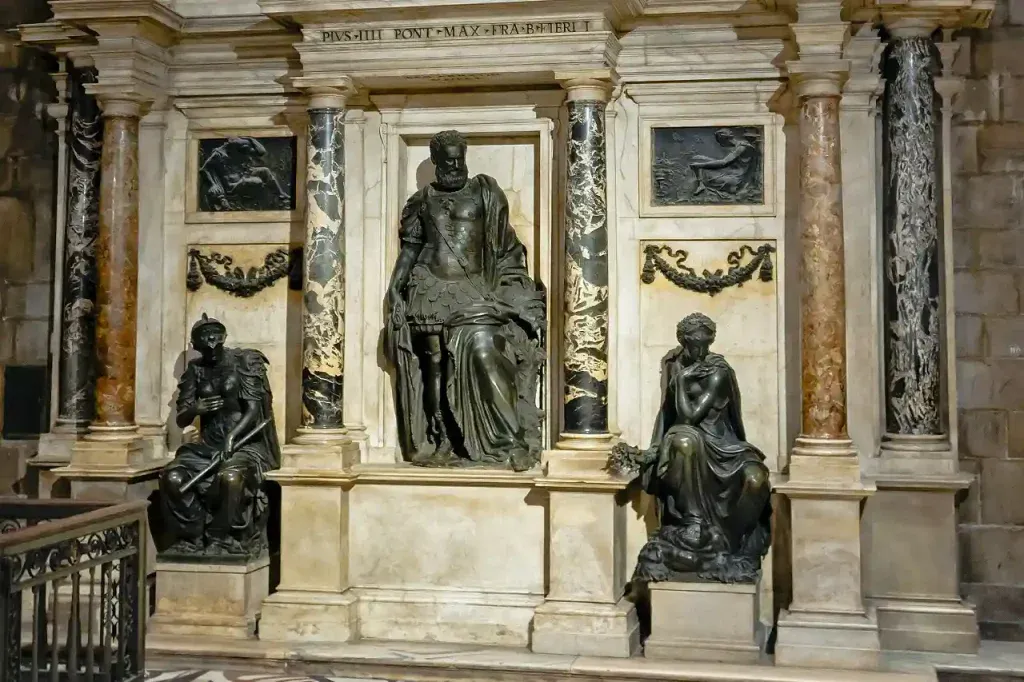
The Duomo’s underground world serves as a historical chronicle of Milan’s most influential figures. Its most famous resident is Saint Charles Borromeo, whose body rests in a crystal urn within the theatrical Scurolo chapel. The cathedral also houses the tombs of the founding Visconti family, including Gian Galeazzo, and the visually striking—yet empty—mausoleum of Gian Giacomo Medici, left vacant due to Counter-Reformation austerity rules.
A fascinating narrative of continuity is found in the tomb of Ariberto da Intimiano, resting in a repurposed 3rd-century Roman sarcophagus. From ancient roots to modern times, as seen with the 2012 burial of Cardinal Martini, the Duomo remains an active sacred site, weaving centuries of political and religious history into its very foundations.
Photo: “Gian Giacomo Medici grave in Milan Duomo” by Daniel Case.
How many sculptures are there, and what are they like?
The Milan Duomo houses more than 3,400 statues, including marble figures, saints, gargoyles, monsters, and decorative elements. It’s the largest sculptural collection of any building in the world. Here are some of the most significant:
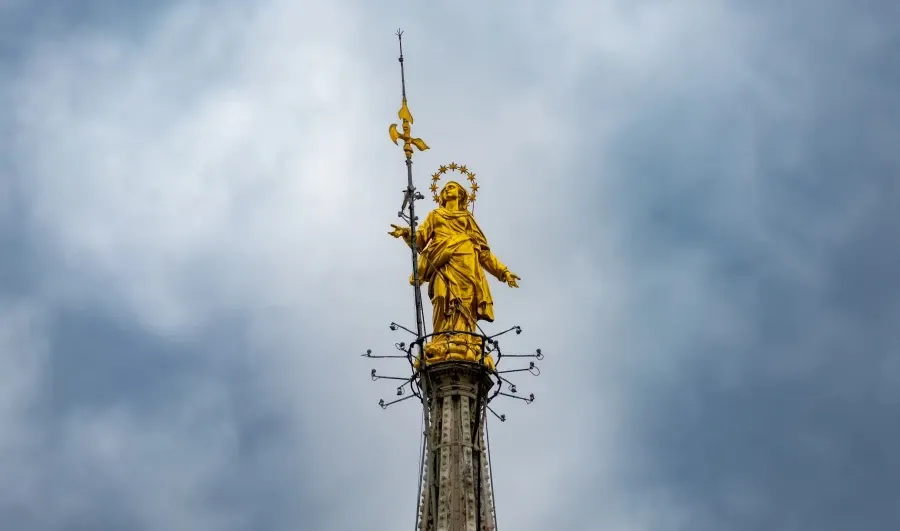
La Madonnina
The Madonnina is, without a doubt, the most emblematic sculpture of the Duomo and of all Milan. Crowning the tallest spire at 108.5 meters high, this statue of the Virgin Mary measures 4.16 meters and was created in 1774 by sculptor Giuseppe Perego.
It’s made of gilded copper, and its shine is visible from various points in the city. The Madonnina holds one hand raised in a gesture of blessing toward Milan, and for centuries was the city’s highest point. Milanese people venerate her as the city’s protector, and there’s a tradition that no building should exceed her in height (although modern skyscrapers have broken this rule, many place small replicas of the Madonnina on their rooftops as symbolic compensation).
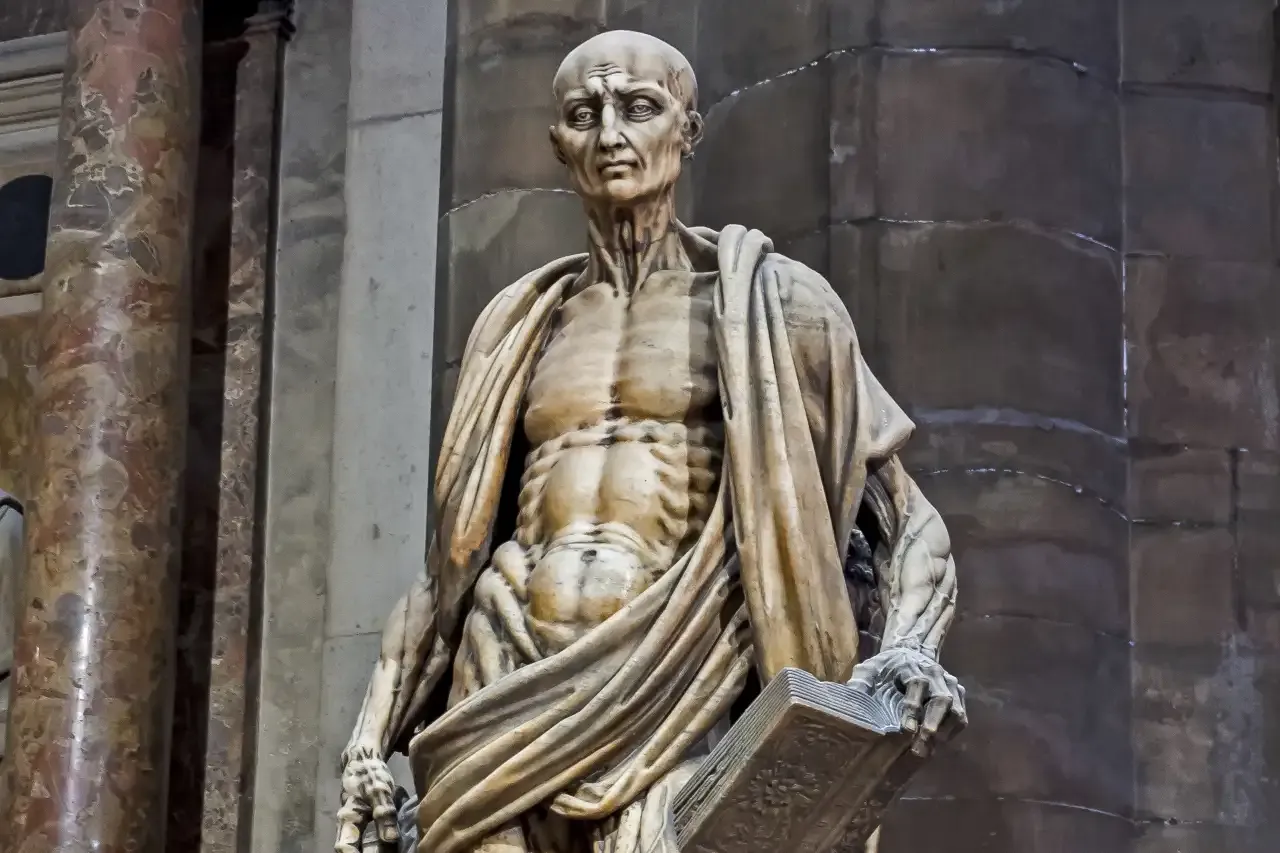
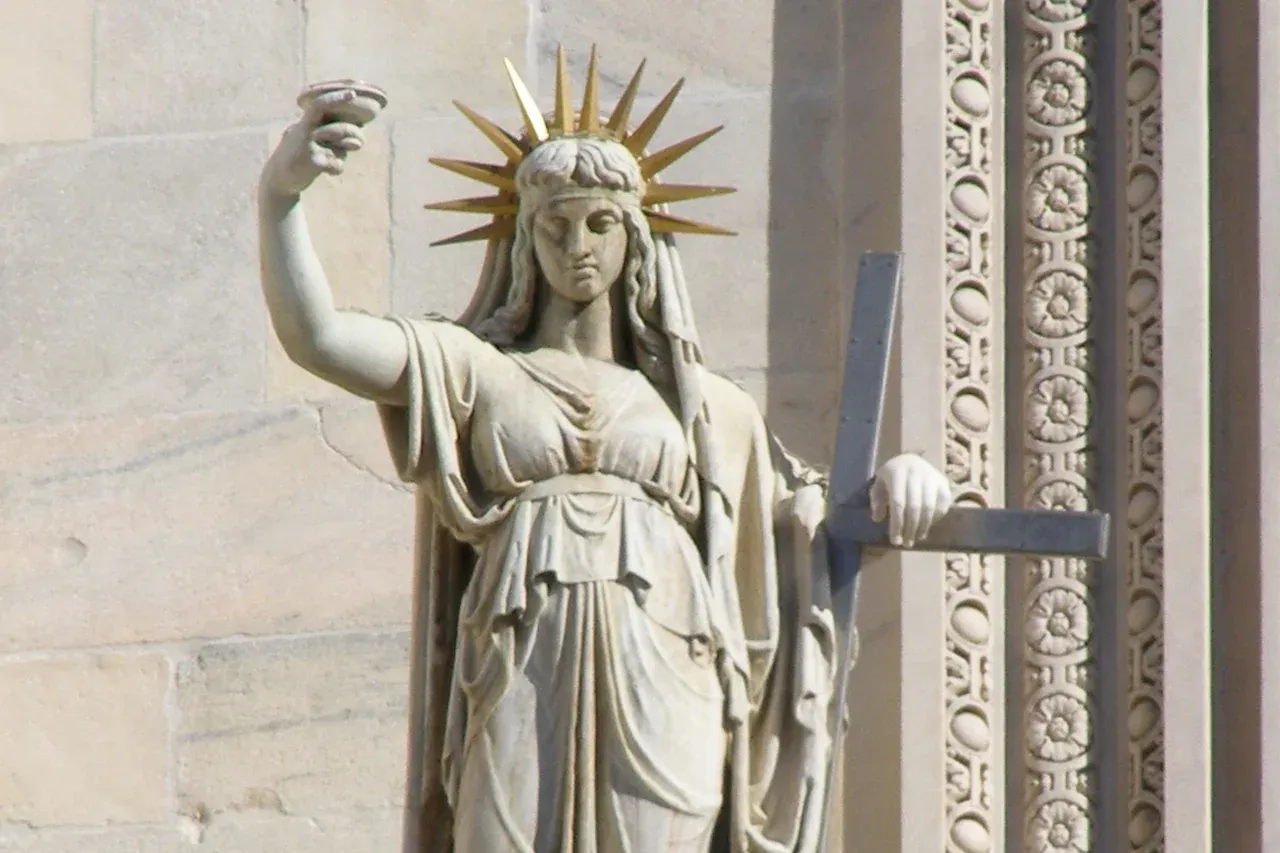
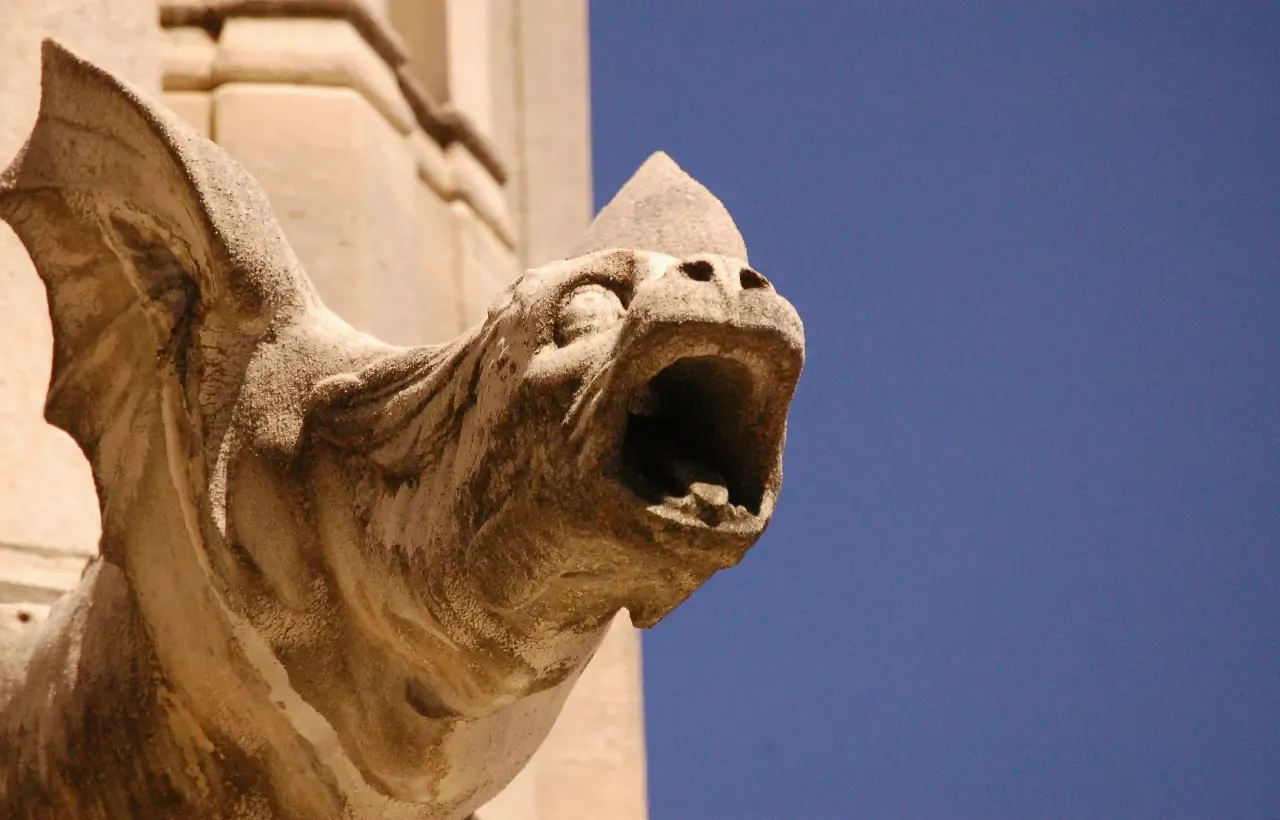
About the Duomo Square
The Piazza del Duomo is not only Milan’s geographic heart, but its historical, cultural, and social epicenter. This rectangular square, approximately 17,000 square meters, has witnessed imperial proclamations, political demonstrations, religious celebrations, and today, the daily bustle of millions of visitors who stop here each year to admire the cathedral.
The square’s current configuration is relatively modern. Although the space has existed since the Middle Ages, it was Giuseppe Mengoni who between 1865 and 1877 gave it its definitive form, demolishing the medieval fabric that surrounded it to create an open and monumental space. The white Candoglia marble pavement (the same as the cathedral’s) was installed in 1865 and replaced the old cobblestones.
The most notable building besides the Duomo is the Galleria Vittorio Emanuele II, located on the north side of the square. This iron and glass shopping gallery, also designed by Mengoni, is considered one of the world’s first shopping malls and connects the Piazza del Duomo with Piazza della Scala. Its monumental entrance, with a 47-meter-high triumphal arch, architecturally dialogues with the cathedral’s façade.
In the center of the square stands the equestrian statue of Victor Emmanuel II, first king of unified Italy, inaugurated in 1896. This bronze sculpture on a granite pedestal is one of Milan’s most popular meeting points.
The Royal Palace (Palazzo Reale), located on the south side, was the residence of Milanese rulers from the Middle Ages until the 19th century. Today it houses the Duomo Museum and hosts important temporary art exhibitions. Its neoclassical façade, the work of Giuseppe Piermarini, complements the square’s architecture.
The square is also the stage for important events: free concerts are held here (such as the traditional New Year’s concert), sporting celebrations (especially when Milan’s teams win titles), and even fashion shows during Fashion Week.
A curious detail: beneath the square extends a network of underground galleries and World War II air raid shelters, some of which can be visited on special tours. The “Duomo” metro station, one of the city’s busiest, is also located here.
For the Milanese, Piazza del Duomo is simply “il centro” (the center), the absolute reference point from which distances are measured and meetings are arranged. It’s where Milan’s heart beats, where amazed tourists, impertinent pigeons, street vendors, and Milanese people hurrying to work all coexist, all under the eternal gaze of the Madonnina.