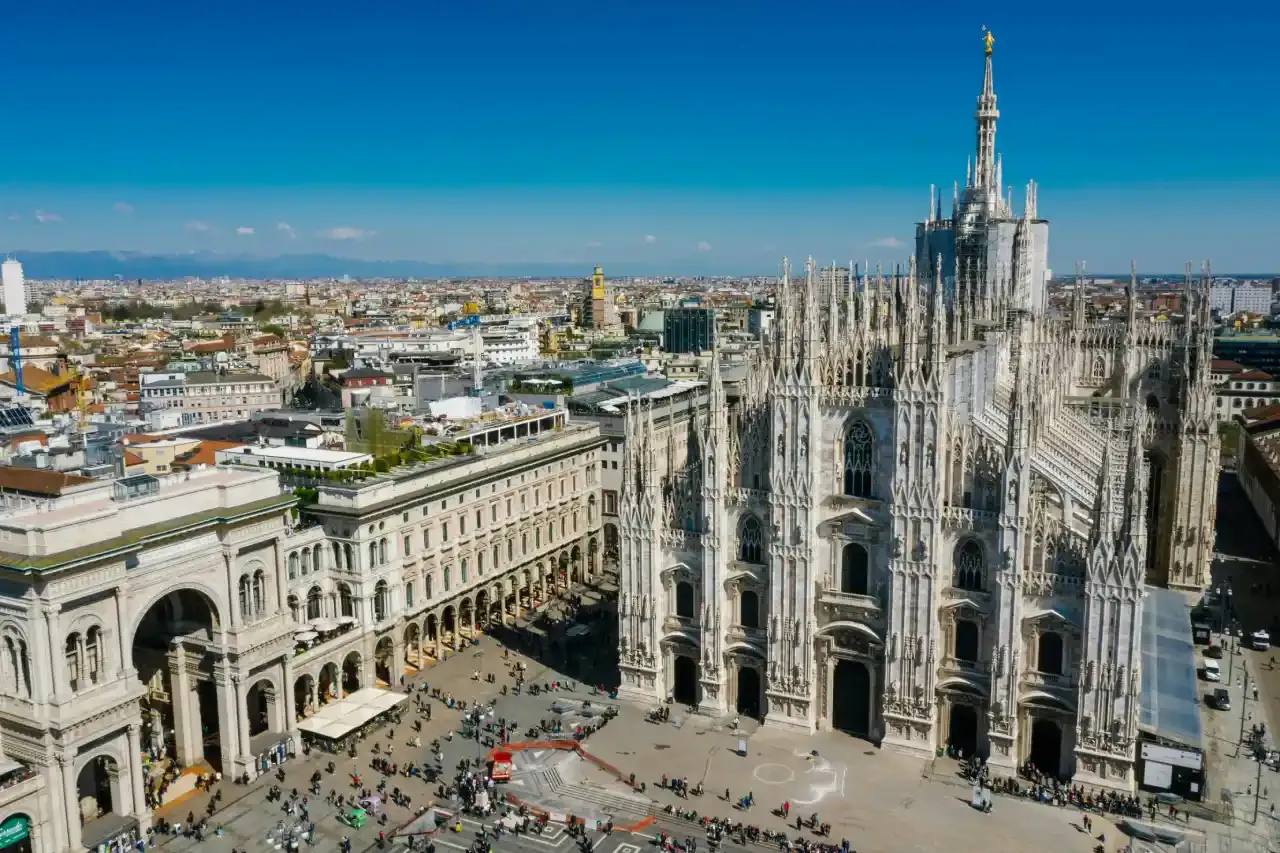
Things to do near Duomo Milan
We’ll tell you what you can do near the Duomo, for all types of tourists: young adults, those with limited time, those who can explore every detail.
Shops
The Duomo of Milan is near Galleria Vittorio Emanuele II and the luxury fashion district.
Museums
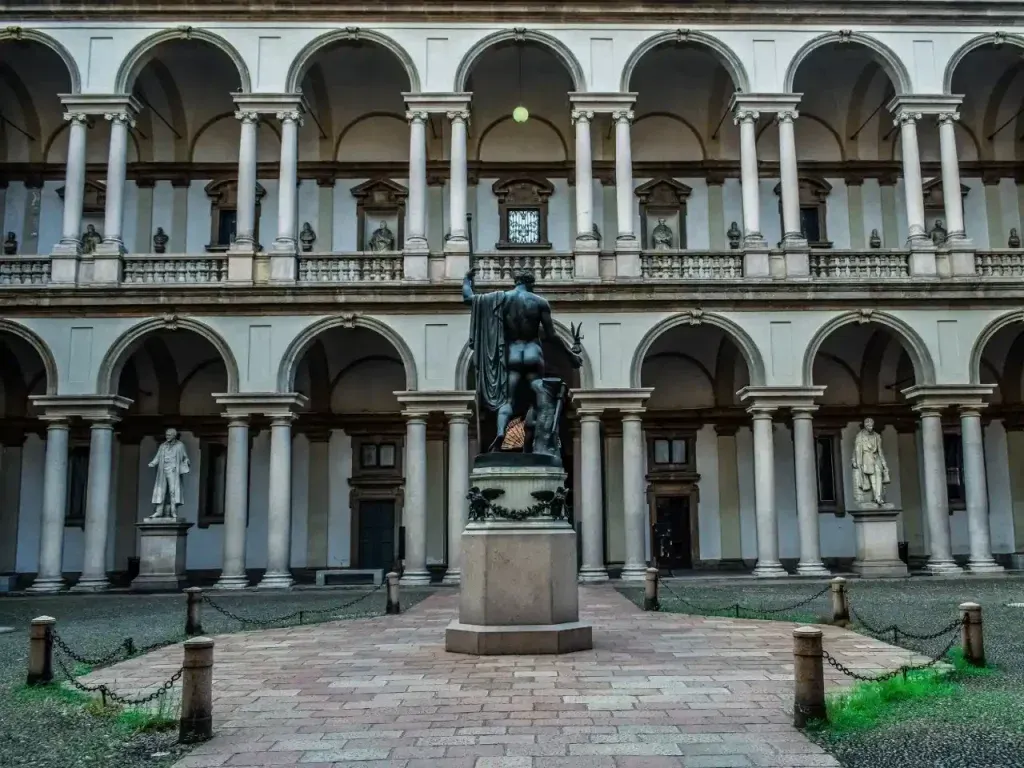
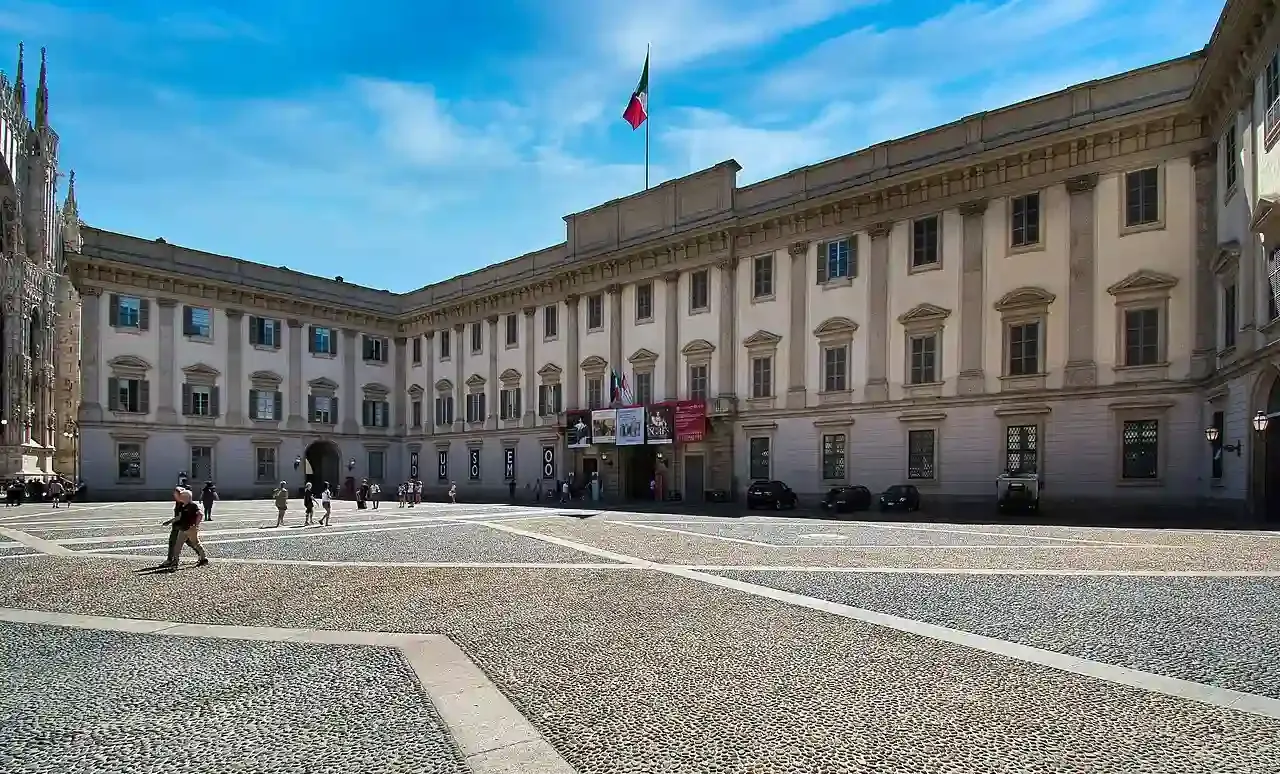
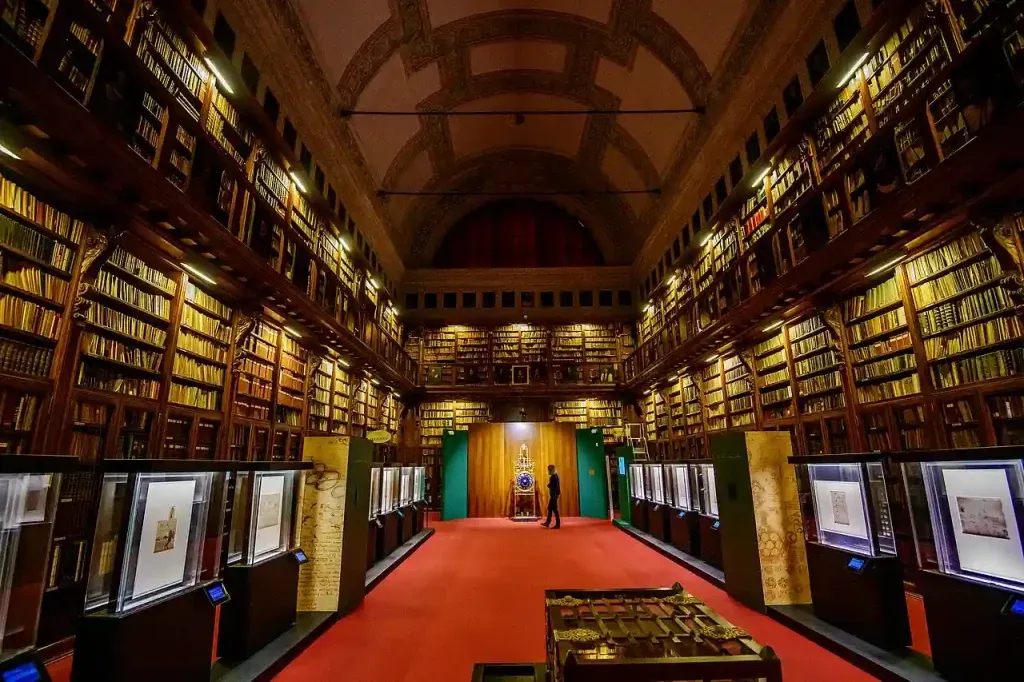
The area features the Museo del Novecento, the Royal Palace, and the Pinacoteca Ambrosiana.
Cultural landmarks
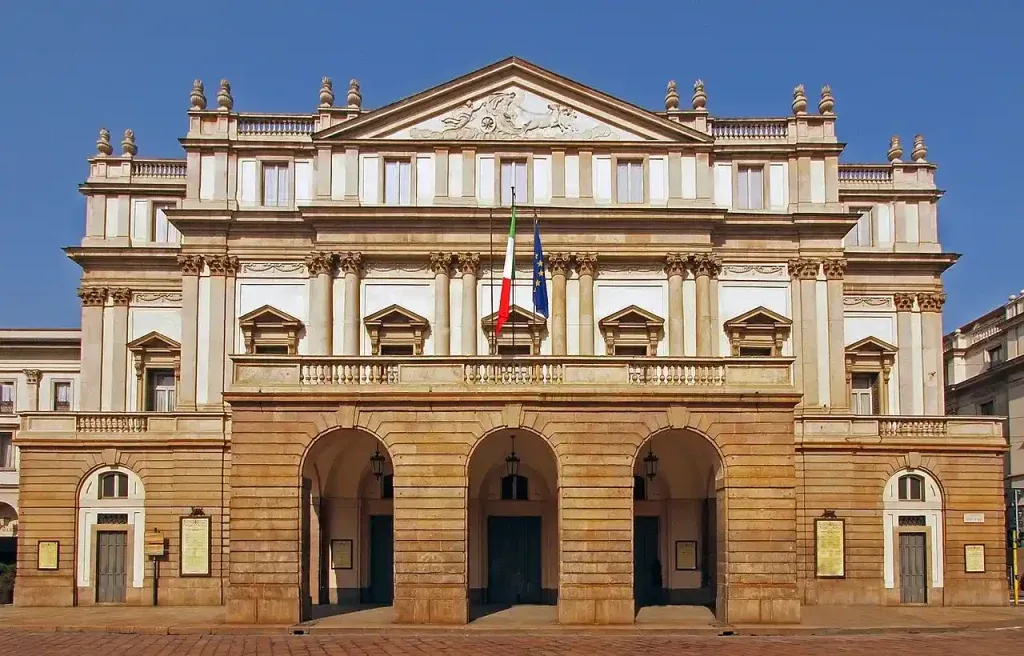
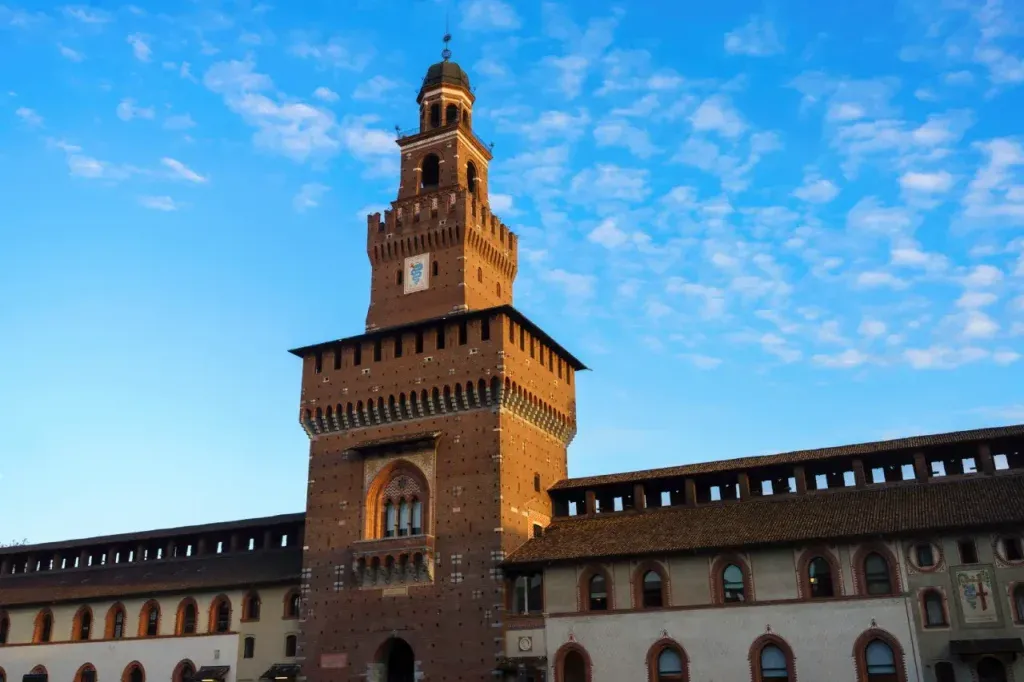
The cathedral is within walking distance of La Scala Theatre and the Sforza Castle.
Begin your visit at Milan Cathedral
The Duomo of Milan is staggering. When you first approach it, the sheer scale will hit you – we’re talking about the third-largest church in the world, with a facade covered in 3,400 statues and 135 spires reaching toward the sky.
But there’s something most tourist guides don’t tell you, and that is that the Duomo is not just the building you see above ground. Beneath your feet lies the Baptistery of San Giovanni alle Fonti, an archaeological site that reveals Milan’s early Christian roots. Think 4th-century foundations, ancient mosaics, and the exact spot where Saint Ambrose baptised Saint Augustine in 387 AD. It’s like peeling back layers of history, adding a whole new dimension to your visit.
Inside the cathedral itself, you’ll find yourself craning your neck at those impossibly high vaulted ceilings. The stained glass windows – some of the largest in Christendom – cast colored light across the marble floors.
The rooftop terraces are worth every step
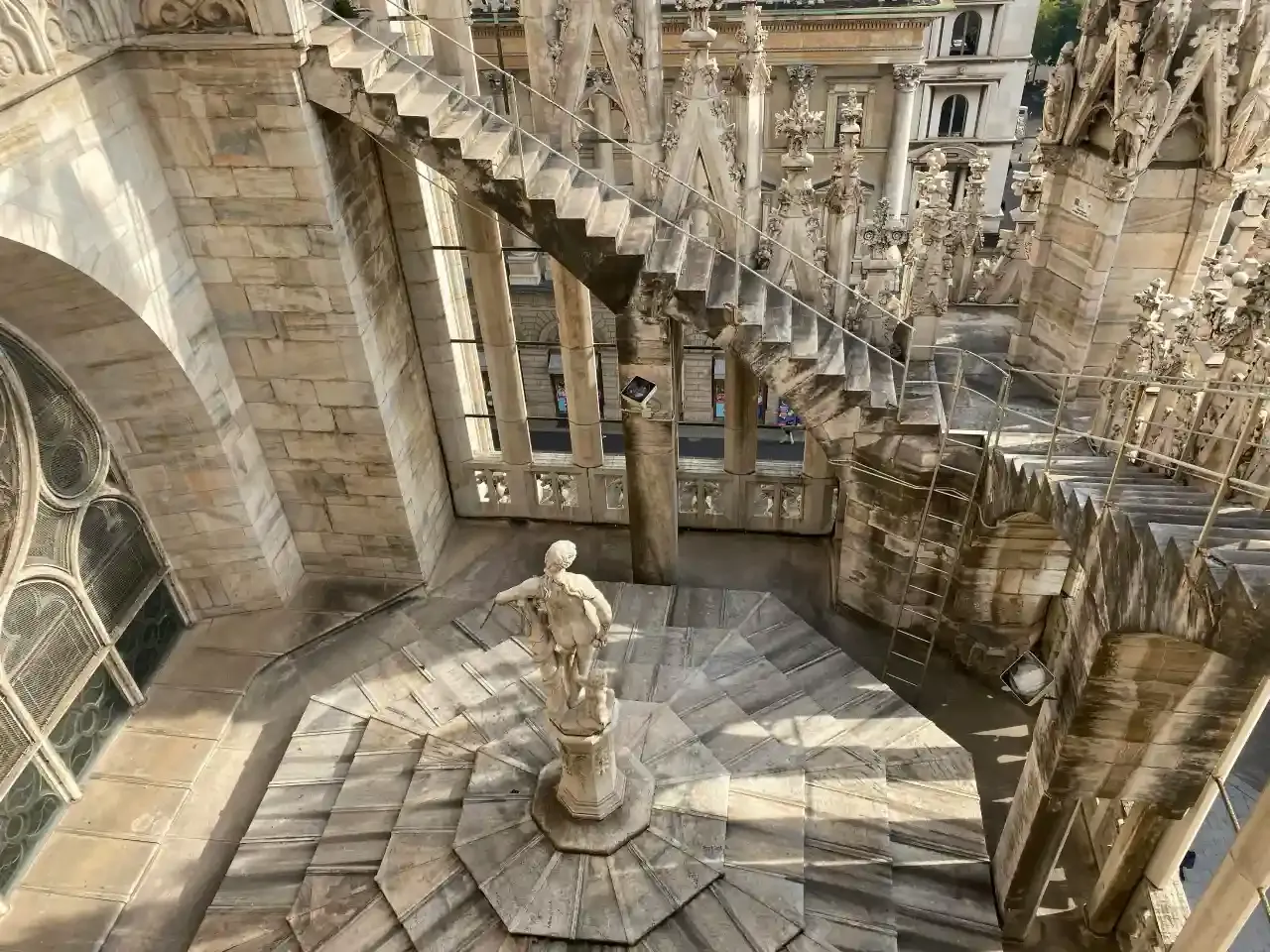
The rooftop terraces are worth every step
Look, I’m going to be direct with you: skip the interior tour if you must, but do not miss the rooftop of the Duomo Milan. Obviously, the entire Duomo is worth a visit, but the rooftop is where the Duomo transforms from impressive to absolutely unforgettable. Up here, you’re walking among a forest of spires, flying buttresses, and marble statues, with Milan sprawling beneath you in every direction.
The star of the show is the Madonnina, the golden statue of the Virgin Mary that’s topped the cathedral since 1774. Standing 108.5 meters above street level, she’s become Milan’s symbol – so much so that for decades, no building in the city was allowed to be taller than her. The views from up here explain why Milan has always been such a powerful city: you can see the Alps on clear days, understand the city’s strategic position, and get a sense of how it connected Northern Europe to the Mediterranean.
How do you get up to the terrace of Milan Cathedral?
You have two options to get up:
- By stairs: It’s about 250 steps. This is the cheaper and often faster option, as the elevator line can be long. It’s a manageable climb for anyone with average fitness.
- By elevator: For a fee, a lift will whisk you up to a landing just below the main roof level, saving your legs (though you’ll still have a few steps to the highest terrace).
What you need to know before visiting
Here’s where a little planning saves you hours of frustration. First, the dress code is strictly enforced. No bare shoulders, no shorts above the knee, no low-cut tops. They’re not messing around – you’ll see people turned away at the entrance. Bring a scarf or light cardigan if you’re wearing something remotely revealing, especially in summer.
For tickets, the Duomo Complex Pass is your best bet. It includes the cathedral interior, the terraces, the archaeological area, the Duomo Museum, and San Gottardo Church. You can choose the pass with stairs or elevator access to the roof (prices differ by about €5-7). Single tickets exist, but they’re a false economy if you plan to see more than just the cathedral floor.
And here’s the critical part, book ahead! The online queue is nothing compared to the line that snakes around the plaza on busy days. We’re talking potentially two hours of standing in the sun versus walking straight to your time slot. The Duomo sells out during peak season, and even off-peak, pre-booking means you control your schedule rather than losing half your morning to a queue.
Shopping and soaking up Milan's lifestyle
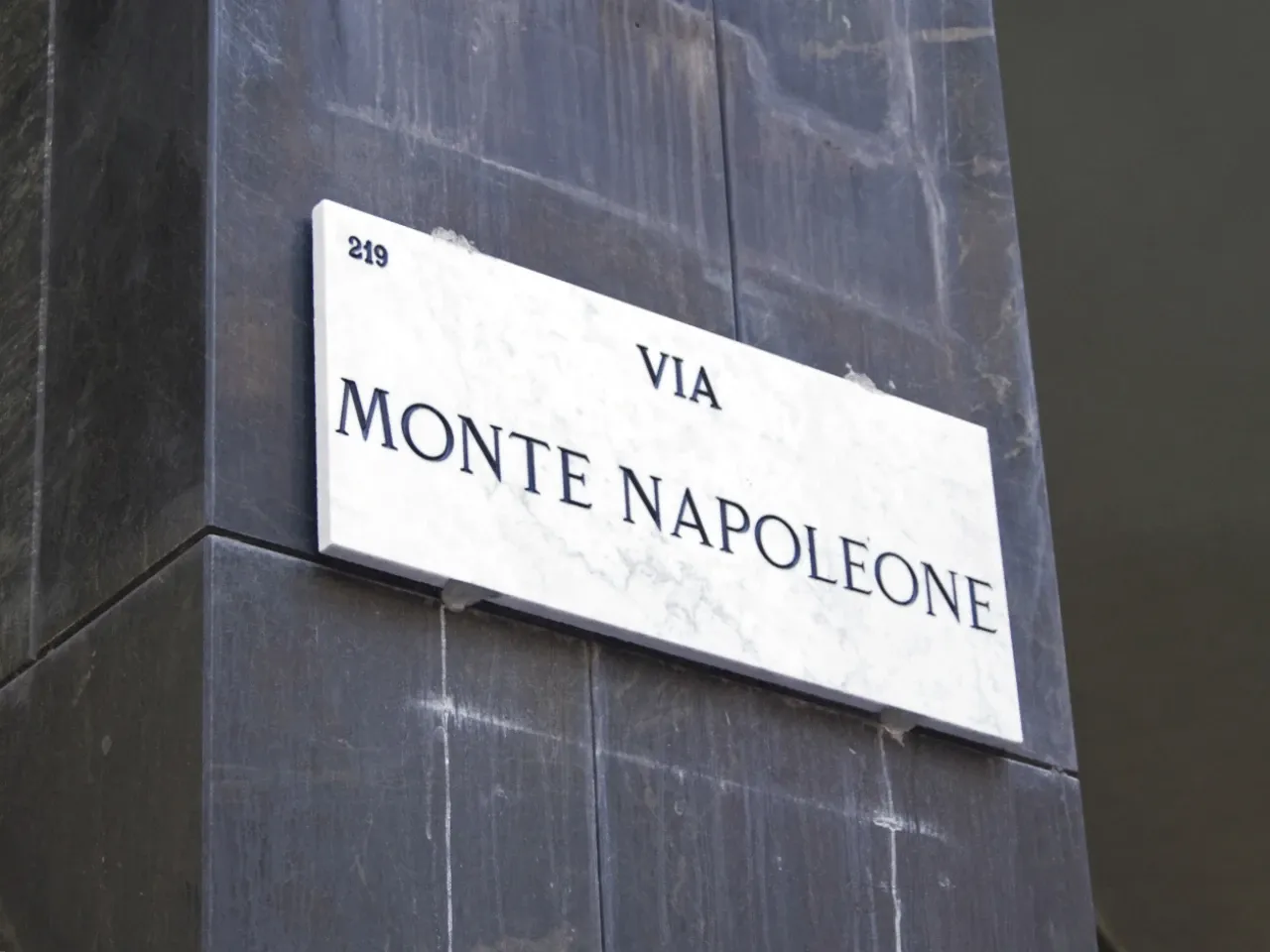
If you’re a young tourist wondering what to do near the Duomo, Milan offers two distinct shopping experiences that reflect the city’s dual personality. Via Monte Napoleone (the world’s most expensive shopping street in 2024) brings together all the Italian luxury brands (Gucci, Prada, Versace, Armani) in 350 metres of pure glamour. Even if it’s just to window shop, dress up and treat it like an open-air fashion museum.
The surrounding streets (Via della Spiga, Via Sant’Andrea, Via Manzoni) complete the ‘Quadrilatero della Moda’. On a budget? Take a bus to the Serravalle Designer Outlet for discounts of 30 to 70 per cent on the same brands, or head to Via Torino, near the Duomo, Milan’s bustling shopping street lined with Zara, H&M and young locals in search of affordable trends.
Photo: “Via Monte Napoleone (Milan)” by MaryG90.
The ritual of aperitivo

The ritual of aperitivo
Milan’s real magic happens at aperitivo (6-8pm), the city’s sacred ritual that goes far beyond happy hour. Order one drink (€10-15), try a Negroni Sbagliato invented here, or the classic Aperol Spritz, and access spreads ranging from chips and olives to full buffets with pasta, cheeses, and hot dishes.
Some places offer “apericena” with enough food to replace dinner. The point isn’t free food or getting drunk; it’s unwinding with friends over slowly-sipped cocktails, watching Milan transition from work mode to evening relaxation.
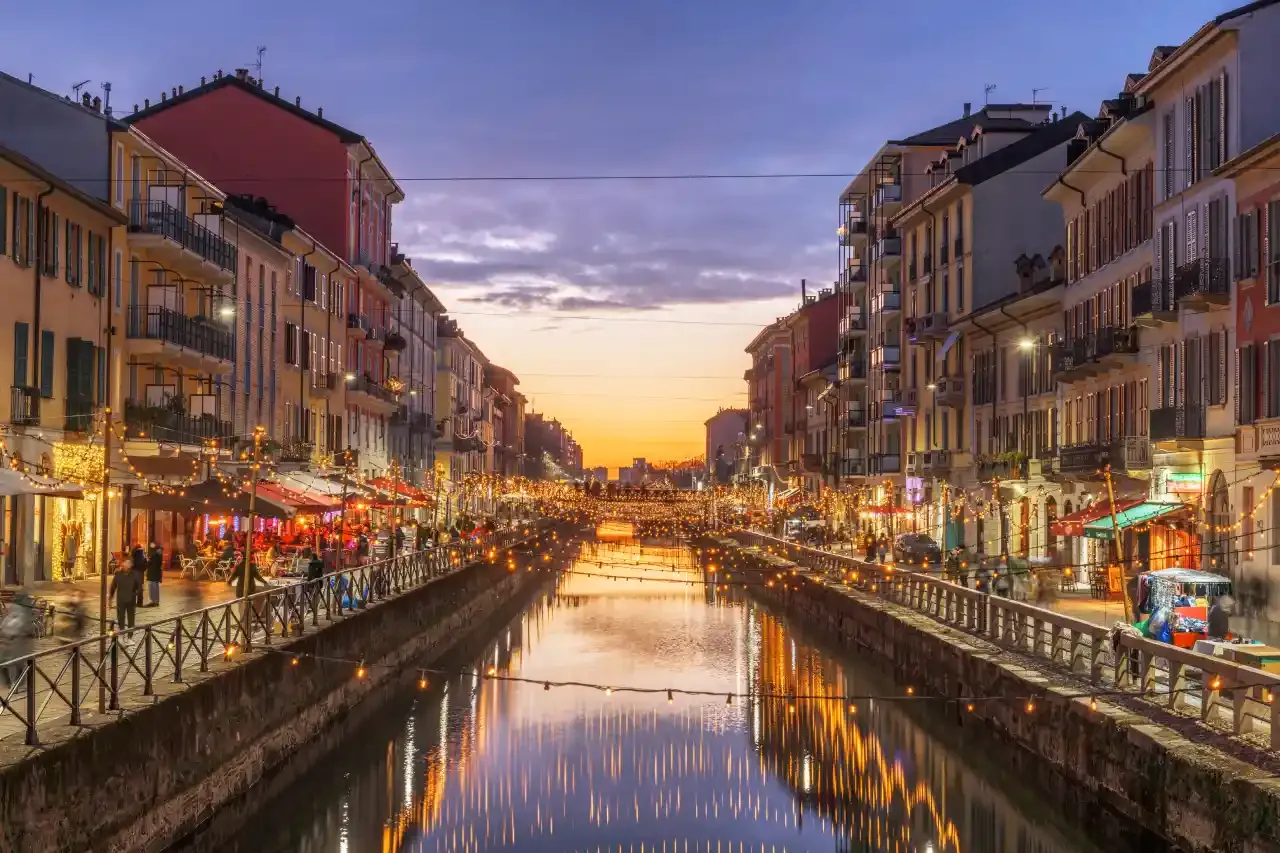
Milan’s nightlife
Experience this ritual at its best in Navigli, the historic canal district that transforms at sunset into Milan’s social epicenter. Bars line the waterfront, lights shimmer on the water, and crowds gather on canal walls as the sky turns orange and pink. Bar-hop along Naviglio Grande—grab a spritz at one spot, sample another buffet down the way, repeat.
Don’t miss Vicolo dei Lavandai, a tiny alley with a beautifully-lit 19th-century washhouse that tourists overlook. Visit on the last Sunday of any month for a massive antique market. By 7pm, whether in sleek Brera lounges or student hangouts, you’ll see Milan shed its business armor and embrace la bella vita—the beautiful life that makes this city unforgettable.
Galleria Vittorio Emanuele II: more than just a fancy shopping mall
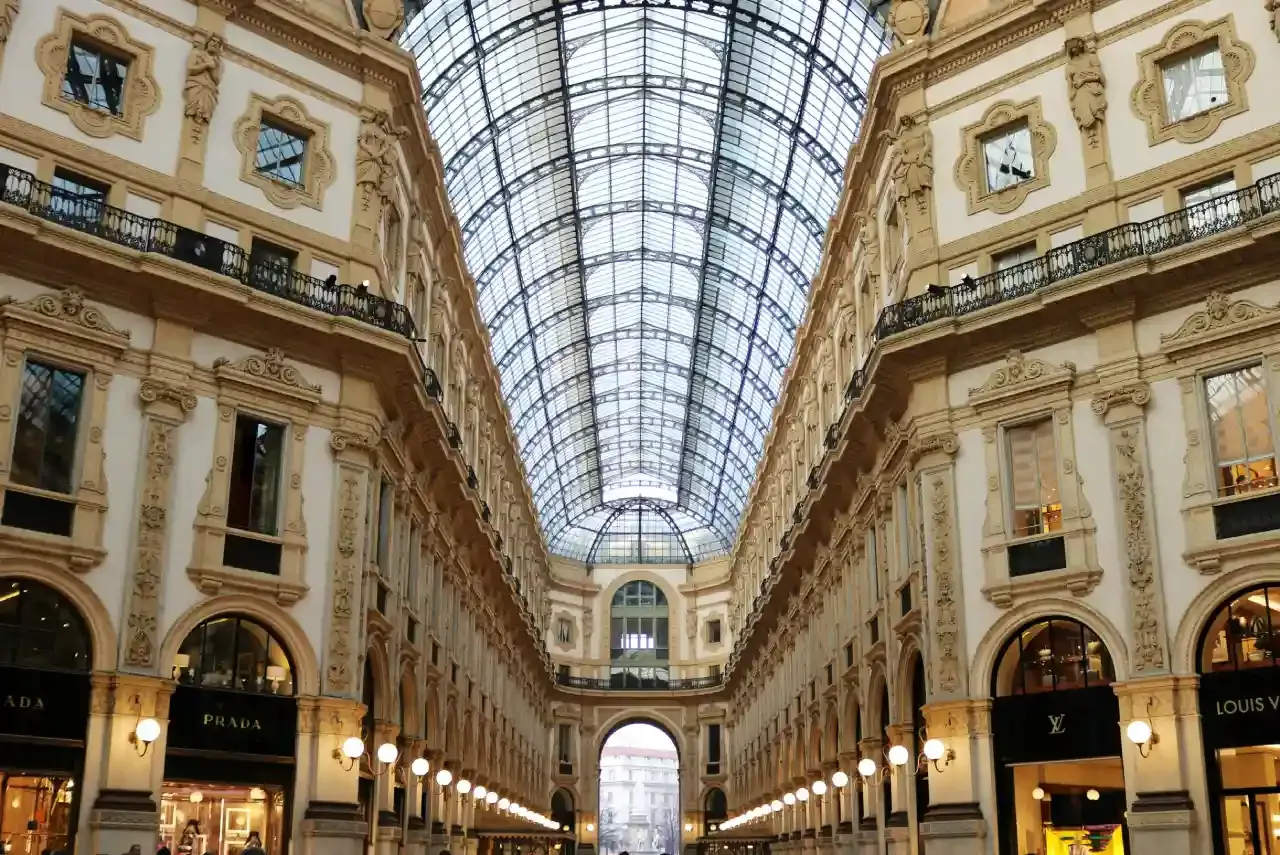
Step through the archway from the Piazza del Duomo and you’ll find yourself in what locals call Milan’s “drawing room”, and they’re not exaggerating. The Galleria Vittorio Emanuele II is a must see if you want to understand Milan’s character.
The architecture tells its own story
The architecture tells its own story
The Galleria Vittorio Emanuele II, built between 1865 and 1877, serves as a monumental symbol of Italian unification and Milan’s modernity. Designed by Giuseppe Mengoni, its revolutionary iron and glass dome was a marvel of 19th-century engineering and the first in the city to feature electric lighting. Beyond its architecture, the floor acts as a political map, showcasing mosaics of Italy’s capitals. This includes the famous Turin bull, where visitors spin on their heel for good luck.
Today, this "living museum" blends luxury boutiques like Prada with legendary establishments such as Camparino in Galleria, the birthplace of the Milanese aperitivo. More than a shopping destination, it offers a timeless experience of elegance, where history and high fashion meet under one spectacular roof.
Three museums you can visit without straying far
Museo del Novecento
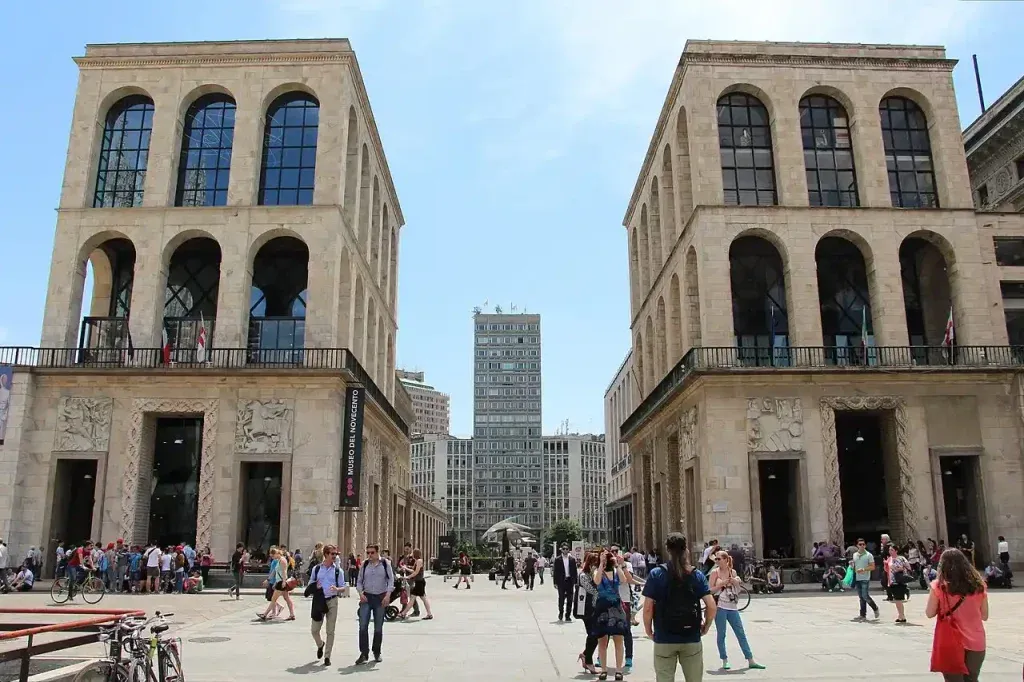
Housed in the Palazzo dell’Arengario, a stark 1930s building from the Mussolini era, this museum is dedicated to 20th and 21st-century Italian art. The permanent collection features over 300 masterpieces tracing modern art’s evolution, with a heavy emphasis on Futurism and key artists like Giorgio de Chirico, Piero Manzoni, and the Arte Povera movement.
Photo: “Palazzo dell’Arengario in Milan, Italy, home to the ‘Museo del Novecento’ (‘Museum of the 20th Century’) art gallery” by Conte di Cavour.
Cultural gems within walking distance
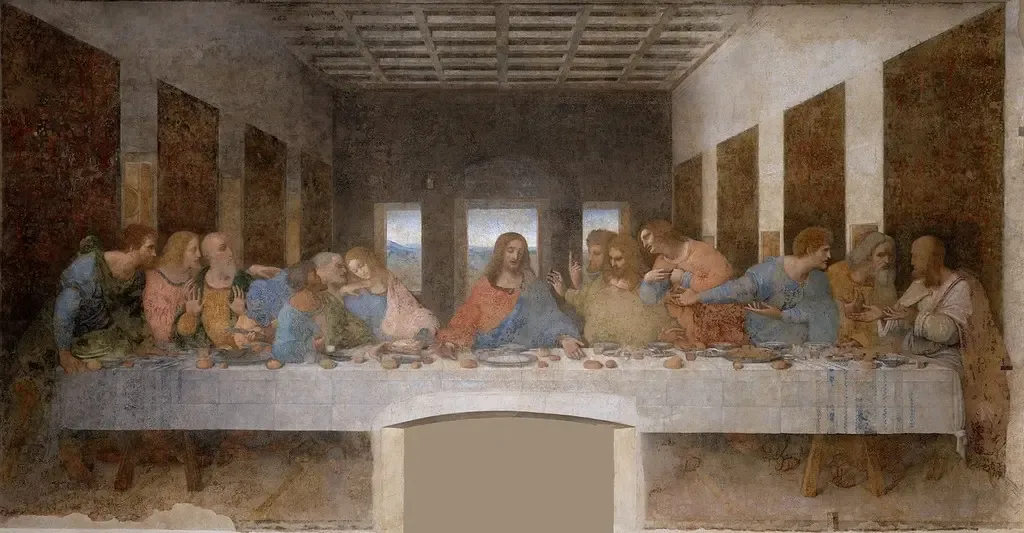
Leonardo's Last Supper
This is one of the most famous artworks in the world, located in the refectory of the Santa Maria delle Grazie convent. Because of the mural’s extreme fragility, access is strictly controlled.
You must book tickets months in advance. We aren’t talking weeks. The official ticket system releases tickets on a quarterly basis, and they sell out almost instantly.
- Booking is mandatory. You cannot show up and buy a ticket.
- Use the official website or the official call center.
- Visits are limited to small groups for only 15 minutes.
- You must arrive at least 30 minutes before your time slot to validate your tickets.