
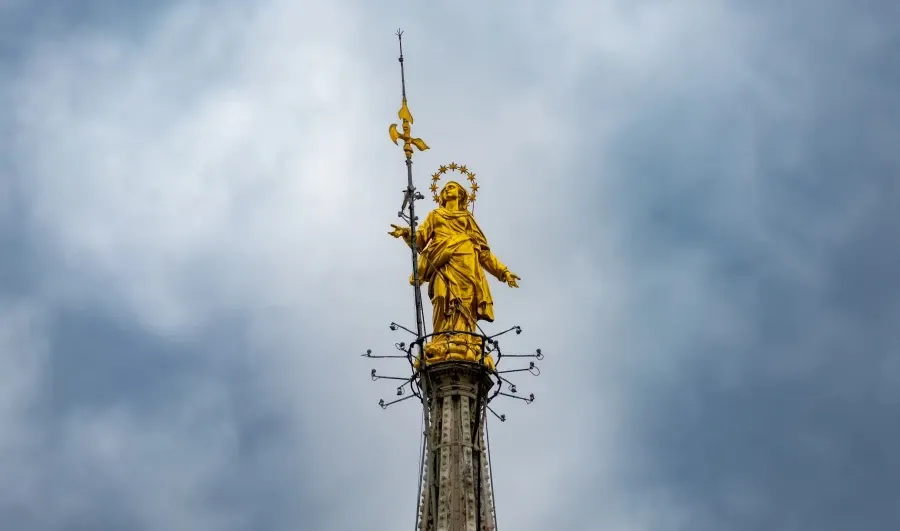
Madonnina Statue
The statue of the Virgin Mary, popularly known as the Madonnina, is an emblematic symbol that crowns the Milan Duomo. Below, we will detail its history and its religious and technical symbolism, explaining architectural data of this golden sculpture that one can observe when visiting the cathedral rooftop.
Height
The statue itself is 4.16 meters tall, standing at a total height of 108.5 meters from the ground.
Significance
She represents the Assumption of the Virgin Mary and acts as the spiritual protector and symbol of Milan.
Total weight
The entire work weighs 984 kg, including its copper plates and internal stainless steel structure.
Where is the Madonnina?
The Madonnina stands at the top of the Milan Duomo, located at Piazza del Duomo, 14, 20122, in Milan, Italy.
Specifically, the figure sits upon the highest point of the cathedral, the Great Spire (guglia maggiore), designed by Francesco Croce. This privileged position allows the image to remain visible from multiple points in the city, establishing itself as the visual and spiritual axis of the metropolis.
To observe the sculpture closely, visitors must climb to the Duomo rooftop. Access to the highest area of the roof (limited for people with reduced mobility) allows a proximity that one cannot obtain from ground level, facilitating the appreciation of the reliefs and the gilding of the work.
Because it sits outdoors at the top of the building, the Madonnina is visible 24 hours a day. At night, the statue maintains a dedicated lighting system that highlights its silhouette.
What is the history of the Madonnina?
The creation of the Madonnina dates back to the second half of the 18th century. The sculptor Giuseppe Perego designed the original model in 1773. The technical execution fell to the goldsmith Giuseppe Bini, who modeled the forms, and the copper-beater Anton Maria Gavazzi, who shaped the metal sheets.
The work officially debuted on December 30, 1774, when workers raised the gilded copper statue to the top of the cathedral’s main spire at a height of 108.5 meters. From that moment, an unwritten rule dictated that no construction in Milano could exceed the height of the Virgin so as not to diminish her role as the maximum protector visible from every point.
Relevance in World War II
During World War II, the Madonnina acquired a fundamental meaning of survival for the citizens. To prevent its golden glow from serving as a reference point for Allied bombers during night attacks, officials covered the statue with gray cloths for five years. The day of its uncovering at the end of the war was considered the symbolic moment of the city’s liberation and the start of Milan’s moral reconstruction.
The 5 Days of Milan
The statue also starred in the “patriotic baptism” of 1848 during the historical episode known as the 5 Days of Milan. On March 20 of that year, the patriots Luigi Torelli and Scipione Bagaggi raised the Italian tricolor flag in the arms of the Virgin to announce the retreat of Austrian troops. This act turned the religious figure into an emblem of civil resistance and Italian nationalism.
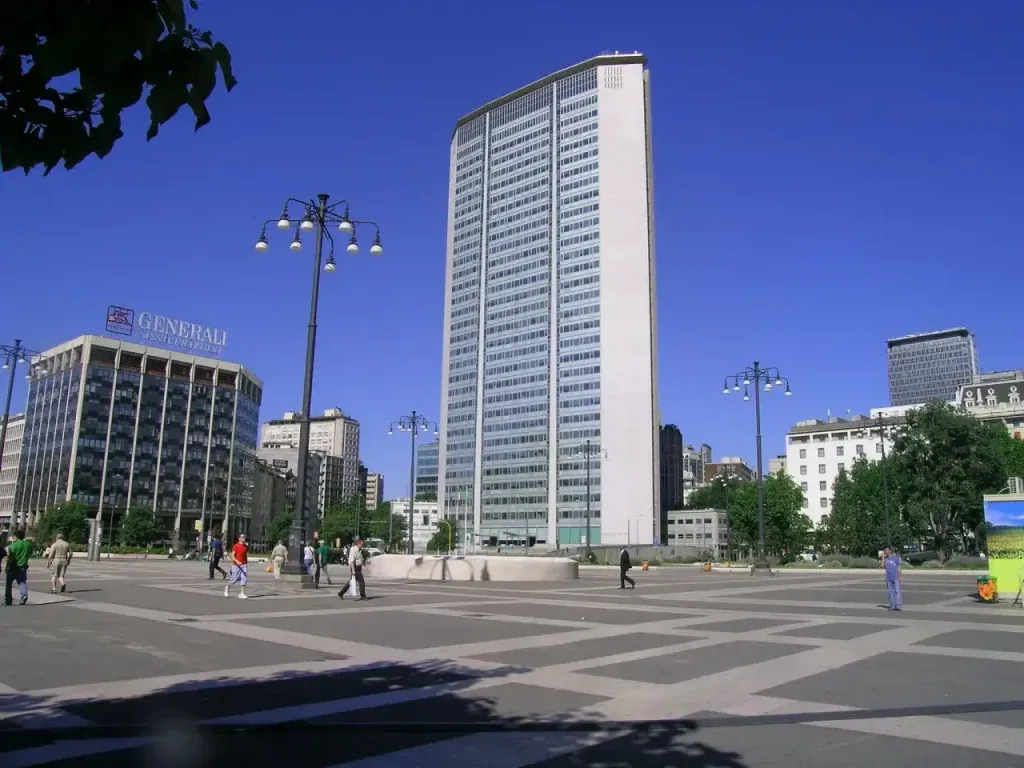
Construction of the Pirelli Skyscraper and the first Madonnina replica
In 1960, the construction of the Pirelli Skyscraper (known as the Pirellone) posed a historical challenge to Milanese tradition, as its 127-meter height exceeded the 108.5 meters of the Duomo’s Madonnina for the first time. To prevent the building from “disrespecting” the city’s protector and to symbolically comply with the old rule, Cardinal Montini (the future Pope Paul VI) and city officials agreed to place the first exact replica of the statue at the highest point of the new building.
Thus, the Virgin maintained her position of dominance over the Milan sky, starting a custom that repeats today whenever a new skyscraper claims the title of the city’s tallest.
Photo: “Pirellone” by Luca Galli.
Structural restoration of 1967
In 1967, workers dismantled the statue due to structural integrity problems. Technical exams revealed that the original iron skeleton had corroded dangerously from exposure to the elements. To ensure its long-term conservation, technicians replaced the internal frame with one made of stainless steel. This intervention ensures the stability of the sculpture against oxidation and wind, allowing its permanent stay on the spire.
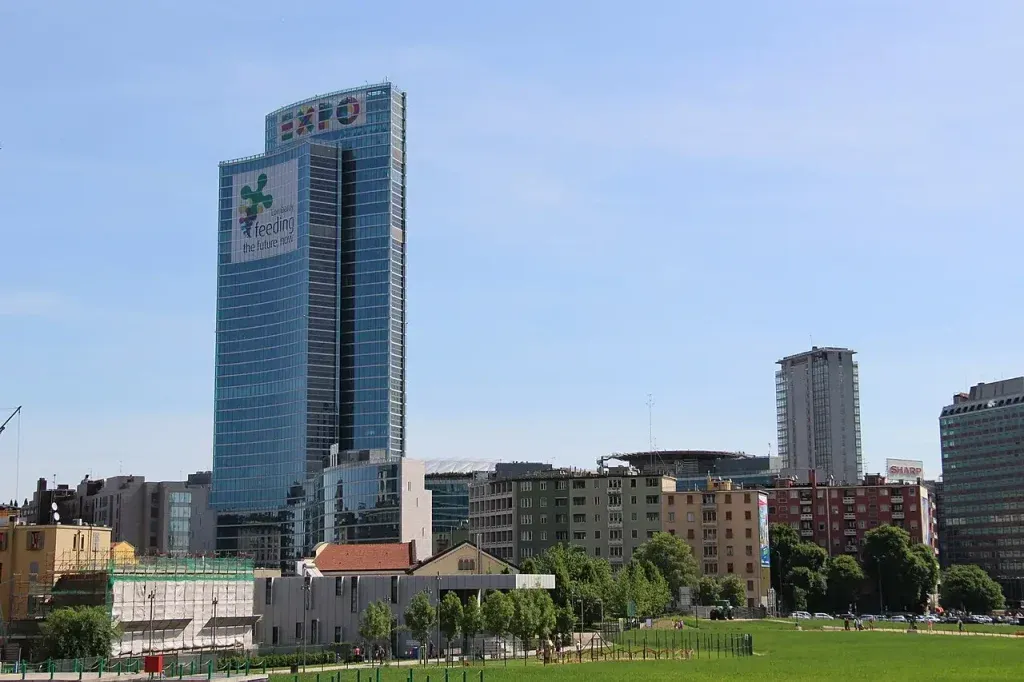
Construction of Palazzo Lombardia and the second replica
Palazzo Lombardia, the seat of the regional government of Lombardy, marked a milestone in 2010 by becoming the first 21st-century skyscraper to displace the historic Pirelli as the highest point in Milan at 161 meters. Following the custom started in 1960, authorities placed a copy of the golden statue on its peak to ensure that the civil and political power of the region remained symbolically under the guardianship of the Madonnina.
This replica is particularly significant because it represented the renewal of the city’s commitment to its spiritual roots amid the urban transformation of the Porta Nuova area.
Photo: “Palazzo Lombardia Milan” by Conte di Cavour.
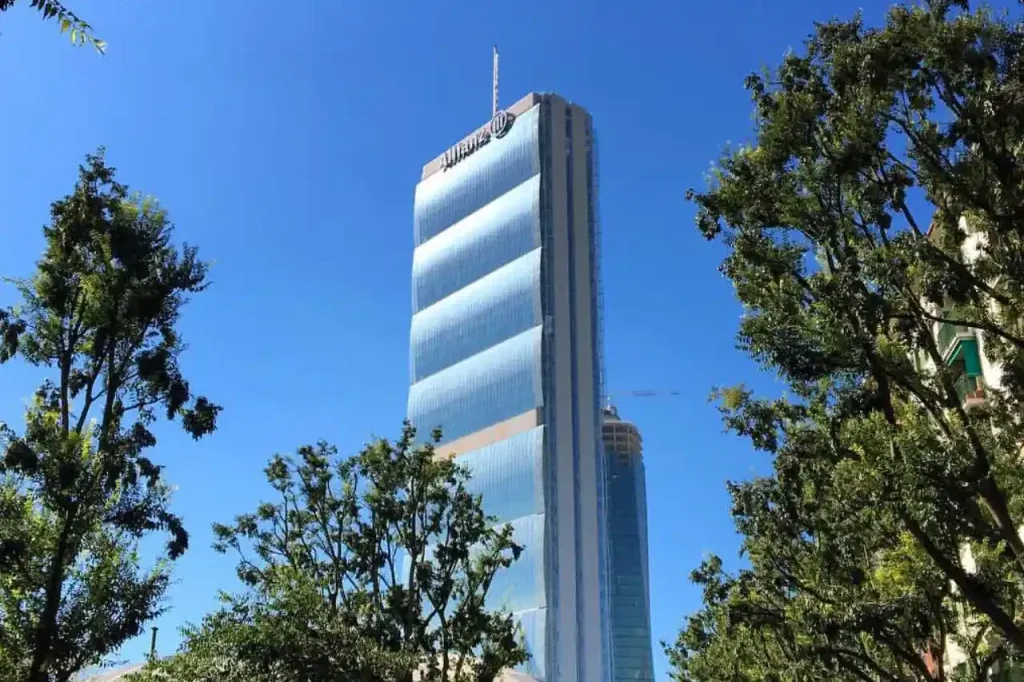
Construction of the Allianz Tower and the third replica
The Allianz Tower, designed by architect Arata Isozaki and nicknamed “Il Dritto” (The Straight One), became the building with the highest roof in Italy upon its completion in 2015, reaching 209 meters.
To honor the centuries-old Milanese tradition, officials installed the third faithful replica of the Madonnina on its rooftop, which Cardinal Angelo Scola blessed before its hoisting; currently, this figure holds the title of the Virgin located at the highest altitude in the entire city skyline.
Photo: “Allianz@Milan” by Paolo.
What is the significance of the Madonnina statue?
The theological meaning of the Madonnina represents the Assumption. The statue of the Virgin Mary appears with open arms and her gaze directed toward the sky. This posture symbolizes her role as an intercessor who asks for God’s blessing for the city located at her feet. The arrangement of the hands suggests both a welcome to the faithful and a divine plea.
The function of the lightning rod
One of the most distinctive elements is the halberd that the Virgin holds. Although it visually camouflages a cross, its original purpose is functional: it serves as an active lightning rod. Designers conceived this element to “fight” storms and protect the physical integrity of the cathedral from electrical impacts. Semantically, this element symbolizes that the Virgin deflects both physical and spiritual evil from the inhabitants.
Etymology and popular culture
The term Madonnina is the affectionate diminutive in Italian for the Virgin Mary, which translates as “little Madonna” or “little Virgin.” Despite its large actual size, the distance from the ground makes it appear small, hence its name. In the cultural sphere, the saying All’ombra della Madonnina (“In the shadow of the Madonnina”) is famous, used by Milanese people to refer to life within the city and under her symbolic protection.
Facts about “La Madonnina”
- Statue height: 4.16 meters.
- Total height from the ground: 108.5 meters.
- Weight of the copper plates: 399.2 kg (880 lbs).
- Weight of the stainless steel structure: 584.8 kg (1,289 lbs).
- Total weight of the work: 984 kg (2,169 lbs).
- Urban height limit: Historically, no building in Milan could be taller than the Madonnina to ensure that no one stood above her protection.
- Tradition of copies: Upon exceeding 108.5 meters, skyscrapers like the Pirelli Tower, Palazzo Lombardia, and the Allianz Tower placed exact copies on their peaks to respect tradition.
- Replicas: Currently, four Madonnina replicas exist in Milan: one in the Duomo Museum and three replicas on high-rise buildings.
- Constant visibility: The statue features a gold coating that shines even on foggy days and possesses an exclusive night lighting system.
- Artistic inspiration: The popular song O mia bela Madunina, written by Giovanni D’Anzi in 1935, is the city’s unofficial anthem.
How to see the Madonnina in detail?
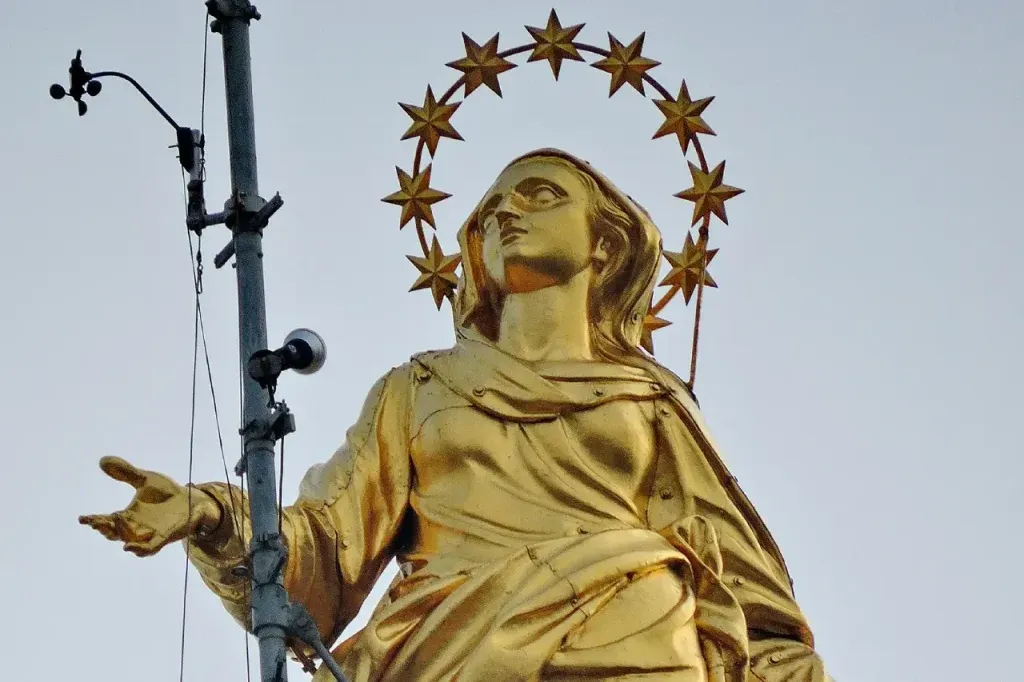
How to see the Madonnina in detail?
As mentioned previously, to see the Madonnina closer, one must climb to the Duomo rooftop. Access to the terrace allows visitors to stand at a much shorter distance than from the square, although the statue remains on the central spire and no one can touch it.
We recommend purchasing the specific ticket for the rooftop to appreciate the details of the gilding and the structure itself.
Photo: “La Madonnina, Duomo di Milano” by Ham II.